How to Be a Better Husband: 12 Habits That Actually Work
General guidance, not therapy or medical advice. This article shares coaching experience and research. If you’re struggling with your mental health or your safety, please talk to a qualified professional. See “When to get extra help” below.
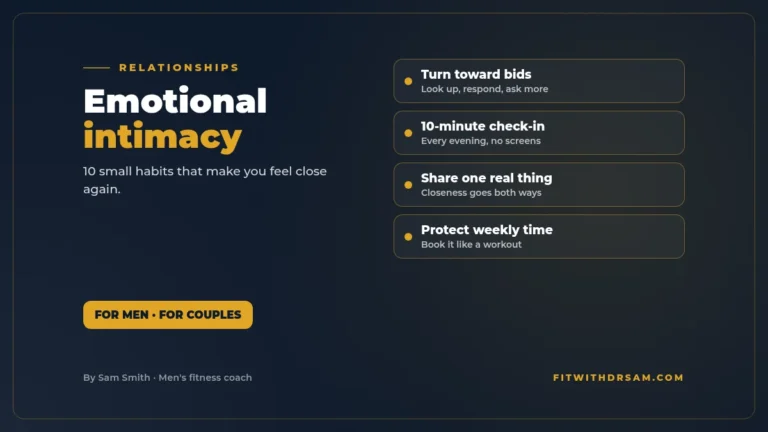
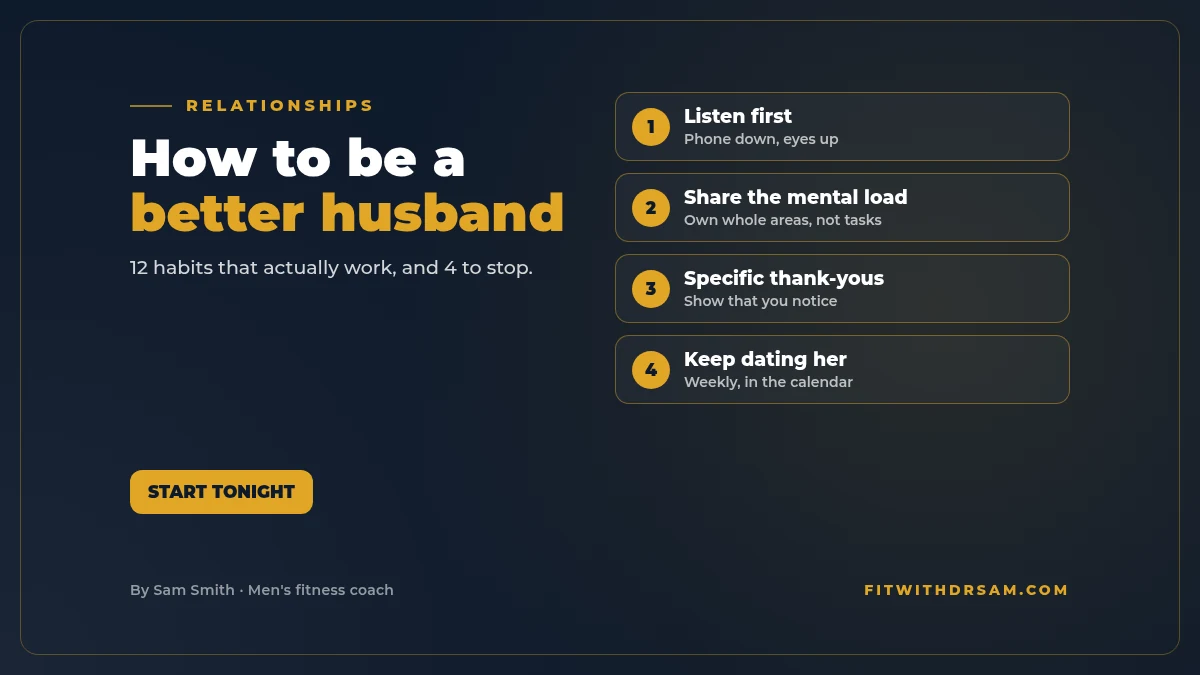
Learning how to be a better husband is one of the best investments a man can make. Most of us were never taught it. We watched our fathers, guessed the rest and hoped it would work out. In more than 10 years of coaching men on fitness and confidence, the conversation often turns to marriage, and the same themes come up every time. The good news: being a better husband isn’t about becoming a different person. It’s about a handful of habits, done consistently. Here are 12 of them, plus what to stop doing. It pairs well with my guide to emotional intimacy in a relationship.
Key takeaways
- Small daily habits matter more than big gestures.
- Happy couples have many more positive moments than negative ones, even during conflict.
- Share the mental load, not just the chores you’re asked to do.
- Avoid criticism, contempt, defensiveness and stonewalling.
- Look after yourself: a healthier, calmer you is a better partner.
Why it matters
The Harvard Study of Adult Development, which has followed men since the 1930s, found that the quality of close relationships was one of the strongest predictors of health and happiness later in life (Harvard Gazette). A good marriage is good for you, not just for your partner.
12 habits of a better husband
1. Listen first
When she talks, put the phone down and look at her. Ask follow-up questions. If you’re not sure whether she wants solutions, ask: “Do you want ideas, or should I just listen?”
2. Share the mental load
It’s not just doing the dishes when asked. It’s noticing that the dishes need doing, that the kids need new shoes, that the car is due a service. Pick whole areas of household life and own them completely, from planning to doing.
3. Say thank you, specifically
“Thanks for sorting out my mum’s birthday present, that was really thoughtful” beats a general “thanks for everything”. Specific appreciation shows you notice.
4. Keep the 5-to-1 ratio
Relationship researcher John Gottman found that stable couples have around five positive interactions for every negative one during conflict (The Gottman Institute). Smiles, touches, jokes, interest and kindness all count. Build up the positive account so the hard days don’t drain it.
5. Fight fair
Talk about the problem, not her character. “I felt hurt when plans changed without a heads-up” lands better than “You never think about me”. Take a 20-minute break if things get heated, then come back.
6. Keep dating her
Put a date in the calendar every week or two, even if it’s a walk and a coffee. Plan it yourself sometimes, including booking the babysitter.
7. Show affection that isn’t a lead-in
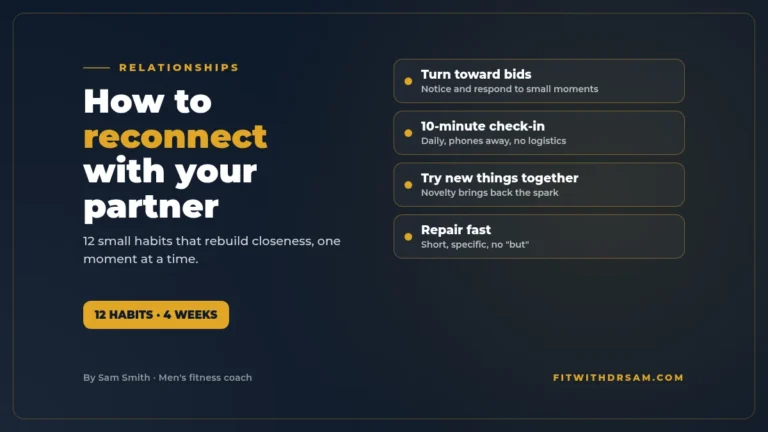
Hugs, holding hands, a kiss on the way out. If every touch leads to sex, affection can start to feel like pressure. Affection for its own sake builds closeness, and closeness tends to help everything else. My guide on reconnecting with your partner has more ideas.
8. Be reliable
Do what you say you’ll do, when you said you’d do it. Trust is built on small promises kept.
9. Support her goals
Ask about her plans and dreams, not just yours. Make practical room for them: take the kids on Saturday mornings so she can train, study or see friends.
10. Own your mistakes
“I was wrong, I’m sorry” with no “but” is one of the strongest things a husband can say.
11. Look after yourself
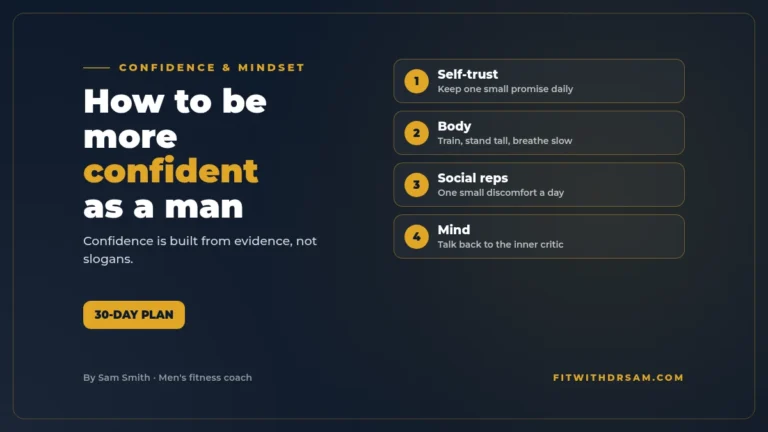
Training, sleep and stress management make you more patient, energetic and confident. A man who feels good about himself is easier to live with. My 30-day confidence plan is a good start, and if you’re over 40, my 3-day workout plan fits a busy family schedule.
12. Keep growing together
Try new things together: a class, a trip, a new hobby. Novelty helps couples feel closer and keeps the relationship from going stale.
4 habits to stop
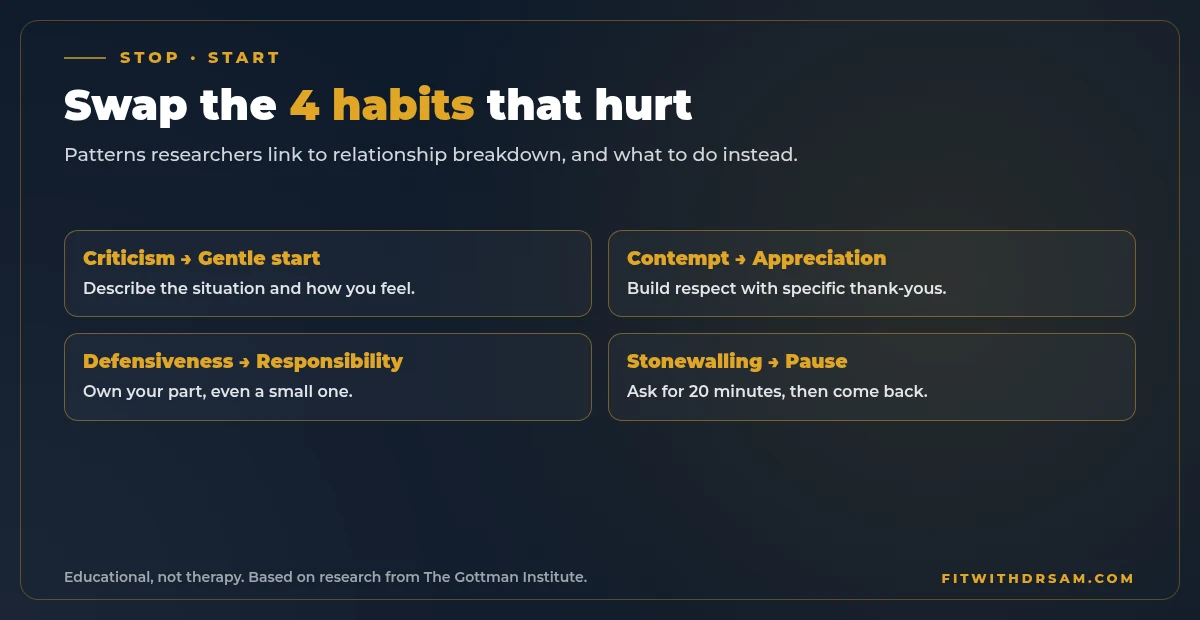
Gottman’s research identified four patterns that predict relationship breakdown, which he called the “Four Horsemen” (The Gottman Institute):
| Habit | Looks like | Try instead |
|---|---|---|
| Criticism | “You always…” “You never…” | Describe the situation and how you feel |
| Contempt | Eye-rolling, sarcasm, mocking | Build appreciation and respect |
| Defensiveness | “It’s not my fault” | Accept some responsibility |
| Stonewalling | Shutting down, walking away silently | Ask for a break, then come back |
Free plan
Get the 7-Day Stamina Starter
Stress and low energy make everything harder at home. The free 7-Day Stamina Starter gives you 10 to 15 minutes a day of breathing, mobility and short workouts to feel calmer and more energetic, with a tick-box tracker.
Send me the free planFree. No spam. Unsubscribe anytime.
What partners often wish husbands knew
When I ask the men I coach what their partners complain about most, and when partners join a session, the same wishes come up again and again. None of them are about money or looks:
- “I want to feel like a priority, not an afterthought.” Ten focused minutes beat an evening of half-attention.
- “I don’t want to be your manager.” Being asked to delegate every job is exhausting. Notice, plan and do.
- “Tell me what’s going on with you.” Silence often reads as distance, even when you’re just tired.
- “Be on my side in front of others.” Disagree in private, back each other up in public, including with family.
- “Keep trying, even after years.” The effort you made while dating still matters.
Being a better husband when you’re also a dad
Kids change everything: less sleep, less time, more stress. Couples with young children often stop treating each other as partners and become co-managers of a busy household. Protect small rituals, like a coffee together before the kids wake up or a 15-minute catch-up after bedtime. Take the night feeds or the school run without keeping score. Your kids learn what a relationship looks like by watching the two of you.
A 7-day better-husband challenge
| Day | Action |
|---|---|
| 1 | Phone-free dinner. Ask about her day and listen. |
| 2 | Take one whole task off her list without being asked. |
| 3 | Give 3 specific thank-yous. |
| 4 | Plan and book a date. |
| 5 | Ask: “What’s one thing I could do that would help you most this week?” Then do it. |
| 6 | Affection with no agenda: hugs, holding hands, a back rub. |
| 7 | Talk about one goal or dream each, and how you can support it. |
When to get extra help
When to get extra help
Consider couples counselling or individual therapy if:
- you argue in the same circles and can’t resolve things
- there’s been an affair or another serious breach of trust
- you or your partner feel persistently low, anxious or angry
- drinking, gambling or other habits are hurting the relationship
Asking for help is a sign of commitment, not failure. In the UK, Relate offers relationship counselling; the APA has guidance on finding a therapist (APA). If anyone feels unsafe at home, contact local support services immediately.
Frequently asked questions
What makes a good husband?
Most partners describe a good husband as someone who listens, is reliable, shares the work of running a home, shows affection and appreciation, handles conflict calmly and keeps growing as a person. Small daily actions matter more than grand gestures.
How can I be a better husband right now?
Today: put your phone away when your partner talks to you, thank her for something specific, take one task off her list without being asked, and plan your next date night. Then repeat tomorrow.
How do I fix my marriage if I’ve been a bad husband?
Start by owning it honestly, without excuses. Ask your partner what would help, listen without defending yourself, and show change through consistent actions over weeks and months. A couples counsellor can help you rebuild trust.
How do I show my wife I appreciate her?
Notice and name specific things she does, help without being asked, remember things that matter to her, and show affection that isn’t only a lead-in to sex. Ask her what makes her feel most appreciated, because people differ.
Should I get couples counselling?
Counselling helps many couples, not only those in crisis. It’s worth considering if you argue in circles, there’s been a breach of trust, or you’ve tried to improve things on your own without success.
The bottom line
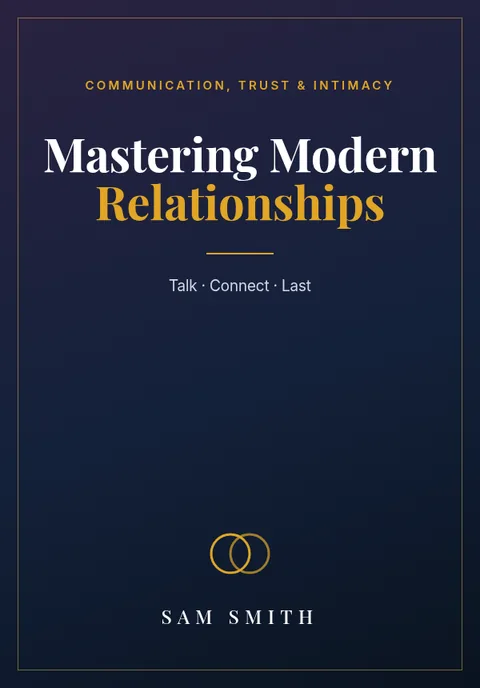
Being a better husband comes down to steady habits: listening, sharing the load, appreciating her out loud, fighting fair, keeping dates and looking after yourself. Start with the 7-day challenge and keep the habits that land. My book Mastering Modern Relationships ($17) goes deeper into communication, trust and keeping the spark alive.
For couples · by Sam Smith
Mastering Modern Relationships
A practical guide for couples: communication tools, resolving conflict without damage, rebuilding trust and keeping intimacy alive, written for men.
See the bookEducational content, not therapy.
References
- The Gottman Institute. The magic relationship ratio, according to science. Read online
- The Gottman Institute. The Four Horsemen: criticism, contempt, defensiveness and stonewalling. Read online
- Harvard Gazette. Good genes are nice, but joy is better (Harvard Study of Adult Development). Read online
- American Psychological Association. Marriage and relationships. Read online
- Relate. Relationship counselling. Read online
All links checked October 17, 2026.