Emotional Intimacy in a Relationship: 10 Habits for Men
General guidance, not therapy or medical advice. This article shares coaching experience and research. If you’re struggling with your mental health or your safety, please talk to a qualified professional. See “When to get extra help” below.
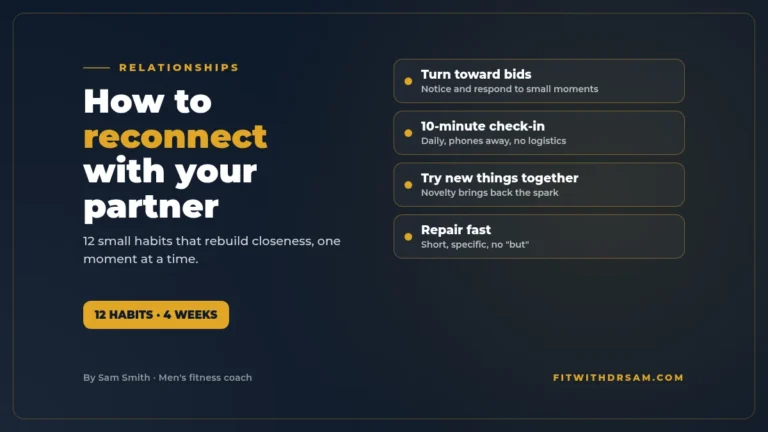
Emotional intimacy in a relationship is the part most men were never taught. We learn how to provide, how to fix problems and how to be strong, but not how to let someone actually know us. Yet when couples drift apart, it’s usually not the big fights that cause it. It’s the slow loss of feeling close. In my coaching, I see it all the time: men who train hard and work hard but feel like roommates with their partner. This guide explains what emotional intimacy really is, why it matters for men, and 10 practical habits to build it. It builds on my earlier guide on how to reconnect with your partner.
Key takeaways
- Emotional intimacy means feeling known, understood and accepted by your partner.
- Small daily responses to your partner’s “bids” for attention matter more than grand gestures.
- Sharing gradually deeper things, in both directions, builds closeness fast.
- Emotional and physical intimacy feed each other.
- Confidence helps: men who are comfortable with themselves find it easier to open up.
What emotional intimacy actually means
Emotional intimacy is trust plus understanding. It’s knowing you can tell your partner you’re stressed about money, scared about your health or proud of something small, and that they’ll respond with interest instead of judgement. It isn’t about talking for hours every night or having deep conversations on demand. It’s a steady sense of “we’re on the same team”.
Research on relationships points the same way. Psychologists studying intimacy describe it as a process: one person shares something personal, the other responds in a way that makes them feel understood and cared for, and repeated over time this builds closeness (Laurenceau et al., 2005). In plain language: open up a little, respond well when your partner opens up, repeat.
Why it matters, especially for men
The Harvard Study of Adult Development, which has followed men for more than 80 years, found that close relationships were among the strongest predictors of a long, happy and healthy life, more than money or fame (Harvard Gazette). Many men rely on their partner as their main or only confidant. When emotional closeness fades, they can feel isolated without quite knowing why.
There’s a practical side too. Couples who feel emotionally close usually handle conflict better, and many find physical intimacy easier and more relaxed. Stress and distance are common reasons men feel pressure in the bedroom, which I cover in my guide to performance anxiety in men. Feeling relaxed and connected is also a big part of lasting longer mentally.
Emotional intimacy vs physical intimacy
| Emotional intimacy | Physical intimacy | |
|---|---|---|
| What it is | Feeling known and understood | Closeness through touch, affection and sex |
| Built by | Listening, sharing, trust, time | Affection, attention, desire, time |
| When it’s missing | Loneliness, “roommate” feeling | Distance, frustration, rejection |
| How they connect | Often makes physical closeness easier | Often deepens emotional bond |
Signs emotional intimacy is fading
- Most conversations are about schedules, kids, bills or chores.
- You keep worries to yourself to “avoid stress”.
- You’re on your phones in the same room most evenings.
- Small irritations turn into big arguments, or you avoid talking altogether.
- You feel lonely even when you’re together.
If two or three of these ring true, you’re not alone. It’s common, and it can be rebuilt with small, consistent actions.
10 habits to build emotional intimacy
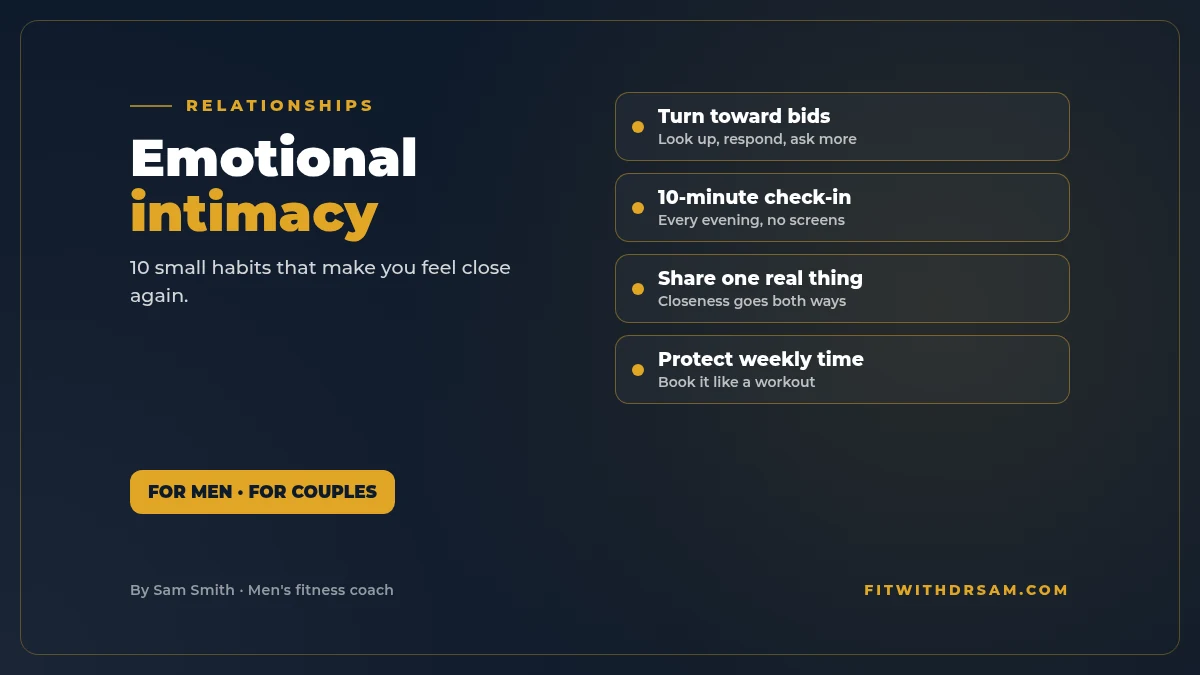
1. Turn toward your partner’s bids
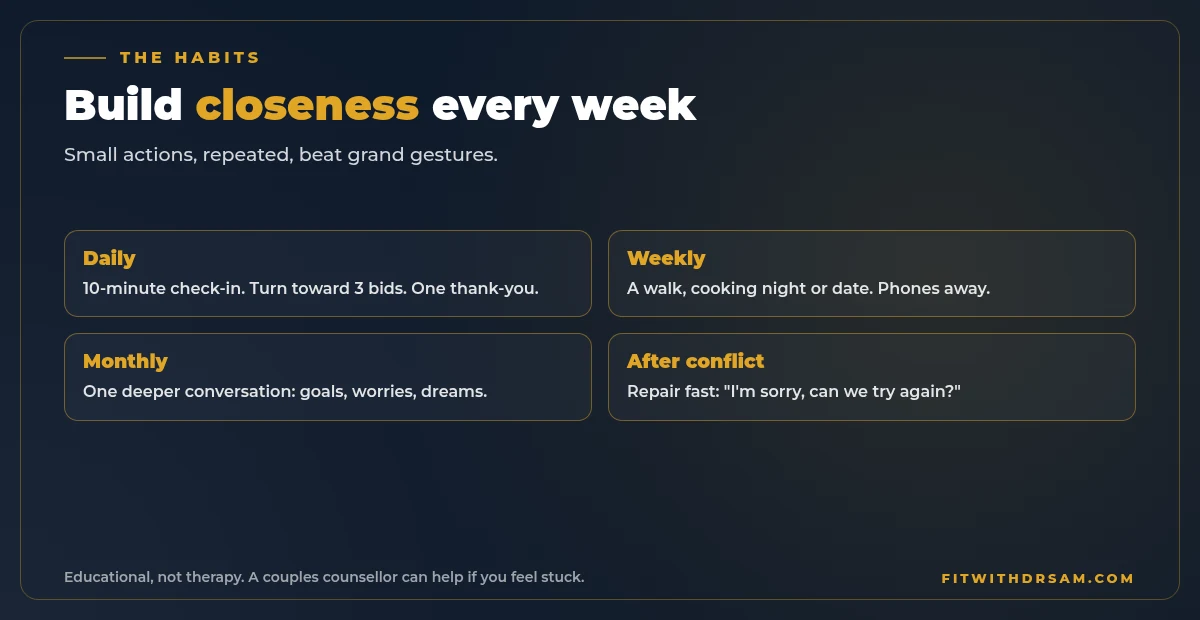
Relationship researcher John Gottman calls small attempts at connection “bids”: a comment about something she read, a sigh, a joke, a hand on your shoulder. In his research, couples who stayed together turned toward these bids far more often than couples who split up (The Gottman Institute). Turning toward can be as simple as looking up from your phone and saying, “Really? Tell me more.”
2. Do a 10-minute daily check-in
No phones, no TV. Ask: “What was the best and hardest part of your day?” Then share yours. Ten minutes a day adds up to more than an hour a week of real connection.
3. Ask open questions
“How was your day?” gets “Fine.” Try: “What’s been on your mind this week?”, “What are you looking forward to?” or “Is there anything I could do to make your week easier?”
4. Share one real thing a day
Emotional intimacy has to go both ways. If you only listen and never share, your partner never really gets to know you. Start small: one honest sentence about how you actually feel, not just what you did.
5. Listen to understand, not to fix
Many men jump straight to solutions. Sometimes that’s welcome, but often your partner wants to feel heard first. Try asking, “Do you want ideas, or do you just want me to listen?”
6. Try the 36-questions approach
In a well-known study, strangers who took turns answering gradually more personal questions felt much closer after 45 minutes (Aron et al., 1997). Couples can use the same idea: take turns with a few deeper questions on a date night, such as “What’s a memory you treasure?” or “What would you love to do in the next five years?”
7. Protect weekly time together
A walk, a cooking night or a proper date once a week. Put it in the calendar like a gym session. If you have kids, even a regular 30-minute coffee together counts.
8. Say thank you out loud
Noticing and naming the things your partner does, big or small, builds goodwill that carries you through harder days.
9. Repair quickly after conflict
Every couple argues. What matters is coming back together. A simple “I’m sorry I snapped, I was stressed, can we try again?” goes a long way.
10. Work on yourself
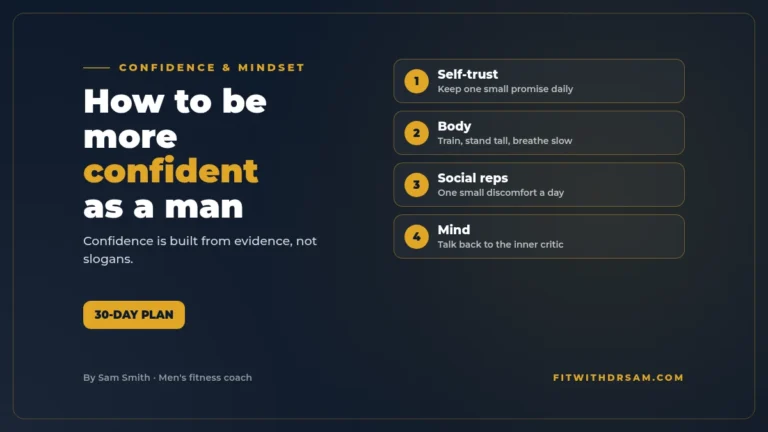
It’s hard to open up if you don’t feel good about yourself. Training, sleep and a sense of purpose make you more confident and more present. My 30-day confidence plan is a good place to start.
Free plan
Get the 7-Day Stamina Starter
The free 7-Day Stamina Starter includes daily breathing and stress-management habits that help you feel calmer and more present with your partner, with a tick-box tracker.
Send me the free planFree. No spam. Unsubscribe anytime.
A simple 4-week plan
| Week | Focus | Action |
|---|---|---|
| 1 | Notice bids | Turn toward at least 3 bids a day |
| 2 | Daily check-in | 10 minutes, no screens, every evening |
| 3 | Share more | One honest feeling a day; one deeper question on date night |
| 4 | Protect time | Book a weekly date and a monthly longer conversation |
When to get extra help
When to get extra help
Consider a couples counsellor or therapist if:
- you argue constantly or can’t talk without it escalating
- there’s been a breach of trust, such as an affair
- one of you feels persistently low, anxious or numb
- you’ve tried for months and still feel stuck
Couples counselling is common and effective for many couples. In the UK, Relate offers counselling; the American Psychological Association has resources on finding help (APA). If you ever feel unsafe in your relationship, contact local support services straight away.
Frequently asked questions
What is emotional intimacy in a relationship?
Emotional intimacy is the feeling of being known, understood and accepted by your partner. It shows up as being able to share worries, hopes and feelings without fear of being judged, and trusting that your partner will respond with care.
What’s the difference between emotional and physical intimacy?
Physical intimacy is closeness through touch, affection and sex. Emotional intimacy is closeness through understanding and trust. They feed each other: many couples find that feeling emotionally close makes physical closeness easier and more enjoyable.
What are signs of a lack of emotional intimacy?
Common signs include talking only about logistics, feeling lonely while together, avoiding difficult conversations, keeping worries to yourself, and feeling more like roommates than partners.
How can a man build emotional intimacy?
Start small: respond when your partner reaches out, ask open questions, share one honest thing about your day or your feelings, and protect regular time together without screens. Consistency matters more than big gestures.
Can emotional intimacy be rebuilt?
Yes, in many relationships. It usually takes steady small actions over weeks and months. If there’s been a breach of trust or constant conflict, a couples counsellor can help you rebuild faster and more safely.
The bottom line
Emotional intimacy isn’t a soft extra. It’s what keeps a relationship strong when life gets busy. Turn toward your partner’s bids, check in daily, share as well as listen, and protect time together. Small actions, repeated, rebuild closeness. My book Mastering Modern Relationships ($17) gives you more tools for communication, trust and keeping the spark alive.
For couples · by Sam Smith
Mastering Modern Relationships
A practical guide for couples: communication tools, resolving conflict without damage, rebuilding trust and keeping intimacy alive, written for men.
See the bookEducational content, not therapy.
References
- Laurenceau JP, Barrett LF, Rovine MJ. The interpersonal process model of intimacy in marriage: a daily-diary and multilevel modeling approach. J Fam Psychol. 2005;19(2):314-323. PubMed
- Aron A, Melinat E, Aron EN, Vallone RD, Bator RJ. The experimental generation of interpersonal closeness. Pers Soc Psychol Bull. 1997;23(4):363-377. Read online
- The Gottman Institute. Turn toward instead of away. Read online
- Harvard Gazette. Good genes are nice, but joy is better (Harvard Study of Adult Development). Read online
- American Psychological Association. Marriage and relationships. Read online
- Relate. Relationship counselling. Read online
All links checked October 17, 2026.