Home Workout for Men Over 40: A 3-Day, 30-Minute Plan
Educational content, not medical advice. This article is general information from a fitness coach. It’s not a diagnosis or treatment. If you have a health concern, see a doctor. See “When to see a doctor” below.
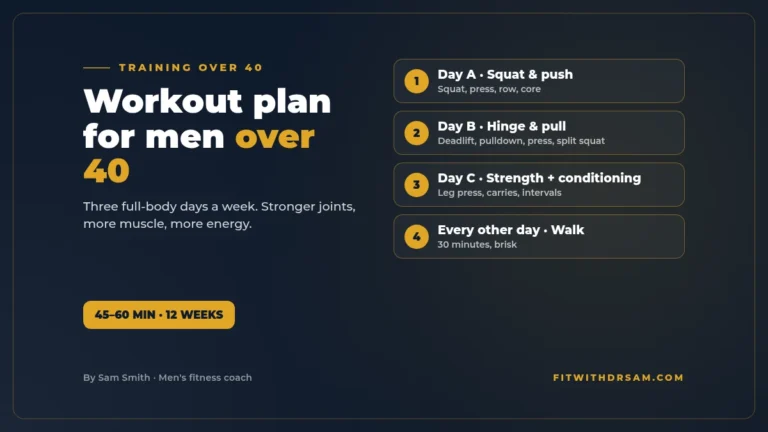
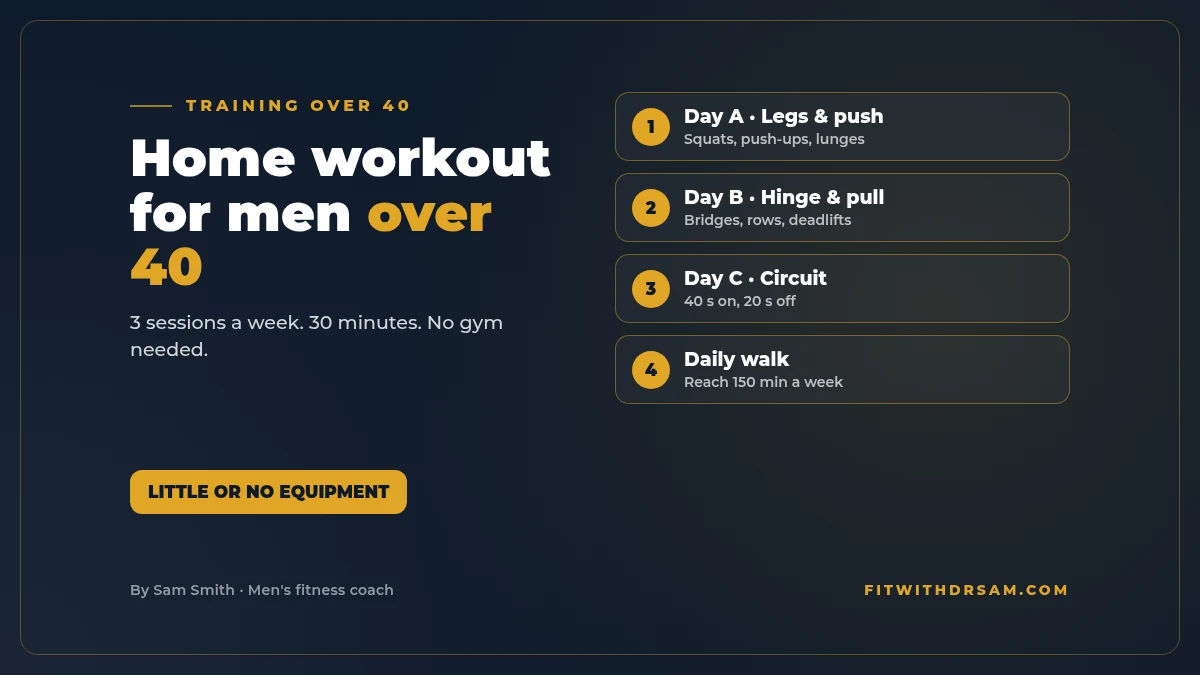
A home workout for men over 40 doesn’t need a garage gym, an hour a day or complicated routines. It needs a few key movements, a plan that gets harder over time and enough recovery for a body that isn’t 25 anymore. After more than 10 years coaching men, many of them busy dads and business owners in their 40s and 50s, this is the plan I give guys who can’t or won’t go to a gym. Three 30-minute sessions a week, little or no equipment. If you do have gym access, my 3-day workout plan for men over 40 uses the same principles with barbells and machines.
Key takeaways
- Men lose muscle gradually from midlife. Strength training is the best way to slow that down.
- Three 30-minute sessions a week at home is enough for most men to get stronger.
- Lighter loads taken close to failure can build muscle about as well as heavy loads.
- Add walking to reach about 150 minutes of moderate activity a week.
- Progress by adding reps, slowing the tempo or using harder variations, not by training to exhaustion.
Why strength training matters more after 40
From around midlife, adults gradually lose muscle mass and strength, a process called sarcopenia when it becomes significant. Resistance training is one of the most effective ways to slow it down (Peterson et al., 2010, found resistance training substantially improved strength in older adults). Muscle isn’t just about looks. It supports your joints, blood sugar control, balance and energy. In a 2022 meta-analysis, muscle-strengthening activity was linked to a 10% to 17% lower risk of death from any cause (Momma et al., 2022). I wrote more on this in my article about muscle mass and lifespan.
Official guidelines agree. The CDC and the NHS both recommend muscle-strengthening activities on at least 2 days a week, plus 150 minutes of moderate activity such as brisk walking (CDC; NHS).
Can a home workout really build muscle?
Yes. A key 2017 meta-analysis found that light loads and heavy loads produced similar muscle growth when sets were taken close to failure; heavy loads were better for maximal strength (Schoenfeld et al., 2017). That’s great news for home training. A push-up, a split squat or a band row can do the job, as long as the last few reps of each set are genuinely hard.
The catch: bodyweight gets easy. You have to keep making exercises harder, through more reps, slower tempo, pauses or harder variations. That’s what the plan below does.
The 3-day home workout for men over 40
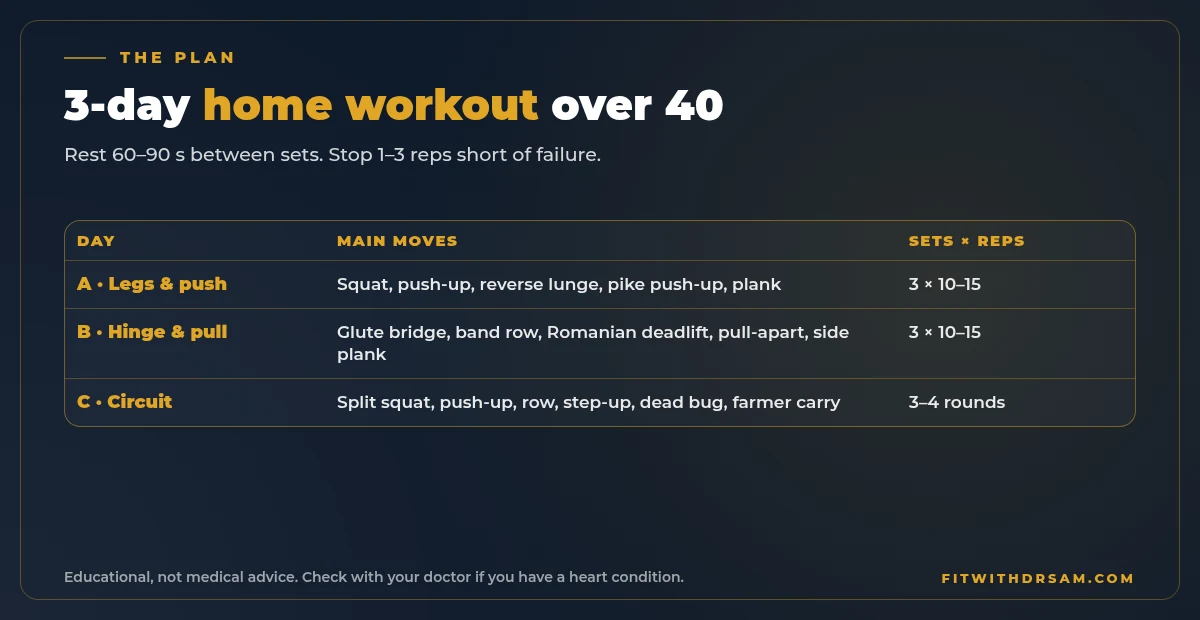
Do the sessions on non-consecutive days, for example Monday, Wednesday and Friday. Start every session with the 5-minute warm-up. Rest 60 to 90 seconds between sets.
Warm-up (5 minutes, every session)
- 1 minute marching or easy step-ups
- 10 bodyweight squats to a chair
- 10 arm circles each direction
- 10 hip hinges with hands on hips
- 10 cat-camel stretches on hands and knees
Day A: Legs and push
| Exercise | Sets × reps | Easier | Harder |
|---|---|---|---|
| Squat (to a chair) | 3 × 10–15 | Hold a door frame | Goblet squat with a dumbbell |
| Push-up | 3 × 6–15 | Hands on a bench or wall | Feet raised, 3-second lowering |
| Reverse lunge | 2 × 8 each leg | Hold a chair | Hold dumbbells |
| Pike push-up or band press | 2 × 8–12 | Band shoulder press | Feet raised pike |
| Plank | 3 × 20–40 s | On knees | Lift one foot |
Day B: Hinge and pull
| Exercise | Sets × reps | Easier | Harder |
|---|---|---|---|
| Glute bridge | 3 × 12–20 | Both feet | Single leg, or dumbbell on hips |
| Band or towel row | 3 × 10–15 | Lighter band | Dumbbell row, 2-second squeeze |
| Romanian deadlift | 3 × 10–12 | Bodyweight hinge | Dumbbells or a backpack |
| Doorway or band pull-apart | 2 × 15 | Light band | Pause 2 seconds |
| Side plank | 2 × 20–30 s each side | On knees | Lift top leg |
Day C: Full-body circuit
Do 3 to 4 rounds: 40 seconds of work, 20 seconds of rest, moving straight through.
- Split squat (alternate legs each round)
- Push-up (any variation)
- Band row or backpack row
- Step-ups onto a stair
- Dead bug
- Farmer carry with heavy bags or dumbbells around the house
How to progress week by week
Use the top of each rep range as your trigger. When you can do all sets at the top of the range with good form, make it harder next session:
- Add reps within the range.
- Slow down: 3 seconds on the way down.
- Add a pause at the hardest point.
- Move to the harder variation.
- Add load: a backpack with books, water bottles, bands or dumbbells.
Most sets should finish with 1 to 3 reps left in the tank. Going to total failure every set mostly adds fatigue and joint stress. Consistency beats intensity; my article on staying consistent with workouts has strategies that help.
Free plan
Get the 7-Day Stamina Starter
Want a gentler start? The free 7-Day Stamina Starter gives you 10 to 15 minutes a day of breathing, mobility and three short bodyweight sessions, with a tick-box tracker.
Send me the free planFree. No spam. Unsubscribe anytime.
Recovery and joints after 40
- Sleep 7 to 9 hours. It’s where most recovery happens. See my guide to sleep and testosterone.
- Eat enough protein: roughly 1.6 g per kg (0.7 g per lb) of body weight a day spread across meals.
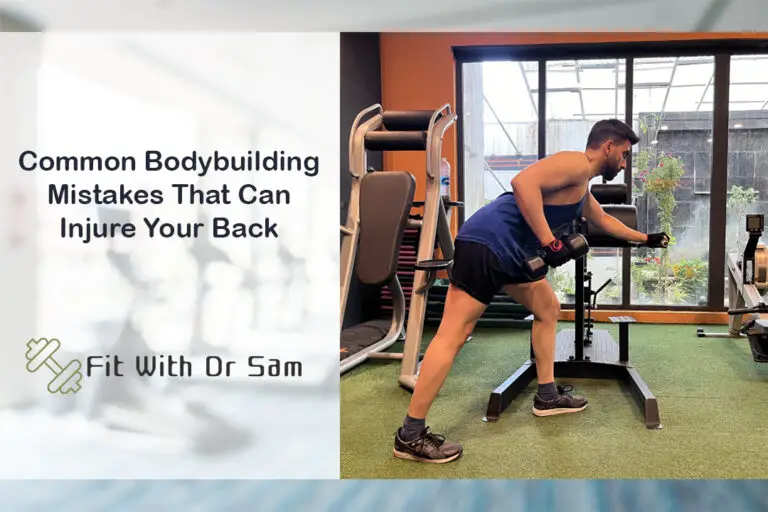
- Protect your back. Brace your core and hinge from the hips. My post on mistakes that can injure your back is worth a read.
- Walk daily. It speeds recovery and counts towards your 150 minutes.
- Take a lighter week every 6 to 8 weeks: same exercises, half the sets.
Common mistakes
- Doing random workouts from social media instead of one plan you progress.
- Only doing cardio. Walking and cycling are great, but they don’t replace strength training.
- Skipping legs. Leg strength is closely tied to staying mobile as you age.
- Going too hard in week 1. Start with 2 sets, build to 3.
When to see a doctor
When to see a doctor
Check with your doctor before starting if:
- you have heart disease, high blood pressure or diabetes, or you’ve been inactive for years
- you get chest pain, unusual breathlessness or dizziness during exercise
- you have joint pain that’s sharp, swollen or lasts more than a few days
- you’re recovering from surgery or an injury
For most healthy adults, the benefits of being active far outweigh the risks (WHO). Start easy and build up.
Frequently asked questions
Can you build muscle at home after 40?
Yes. Muscle responds to training at any age. Studies show that lighter loads taken close to failure can build muscle about as well as heavy loads, so bodyweight exercises, bands and a pair of dumbbells are enough for most men if you keep making them harder over time.
How many days a week should a man over 40 work out at home?
Three strength sessions a week, on non-consecutive days, is a great start. Add walking or other moderate cardio on the other days to reach about 150 minutes a week, which matches CDC and NHS guidance.
What equipment do I need for a home workout?
None to start. Bodyweight works for the first months. After that, a set of resistance bands, a pair of adjustable dumbbells or kettlebells, and a sturdy chair or bench cover almost everything. A doorway pull-up bar is a good extra if your shoulders are healthy.
Is a 30-minute workout enough after 40?
Yes, if you train with real effort. A focused 30-minute session three times a week, with most sets finishing 1 to 3 reps short of failure, is enough to build strength and muscle for most men.
How do I avoid injury working out at home over 40?
Warm up for 5 minutes, start with easier versions of each exercise, increase difficulty gradually, and stop any movement that causes sharp pain. Joint aches that last more than a few days are a sign to reduce volume or get checked.
The bottom line
You don’t need a gym to stay strong after 40. Three 30-minute home sessions a week, built on squats, push-ups, hinges and rows, plus daily walking, will cover most of what you need. Make the exercises a bit harder every week, recover well and stay consistent. My 30-day challenge, The Warrior’s Stamina ($29), turns this into a daily routine for strength, energy and stamina.
30-day challenge · by Sam Smith
The Warrior’s Stamina
A 30-day challenge with daily bodyweight sessions, breathing and stamina drills you can do at home, with a printable tracker.
See the bookResults vary. Educational content, not medical advice.
References
- CDC. Adult activity: an overview. Read online
- NHS. Physical activity guidelines for adults aged 19 to 64. Read online
- WHO. Physical activity fact sheet. Read online
- Peterson MD, Rhea MR, Sen A, Gordon PM. Resistance exercise for muscular strength in older adults: a meta-analysis. Ageing Res Rev. 2010;9(3):226-237. PubMed Central
- Schoenfeld BJ, Grgic J, Ogborn D, Krieger JW. Strength and hypertrophy adaptations between low- vs. high-load resistance training: a systematic review and meta-analysis. J Strength Cond Res. 2017;31(12):3508-3523. PubMed
- Momma H, Kawakami R, Honda T, Sawada SS. Muscle-strengthening activities are associated with lower risk and mortality in major non-communicable diseases. Br J Sports Med. 2022;56(13):755-763. PubMed Central
All links checked October 17, 2026.